
PydanticAI:新一代 Python Agent 框架
官方文档:https://ai.pydantic.dev/GitHub 仓库:https://github.com/pydantic/pydantic-ai版本:v0.1.x(2025年最新) 许可证:MIT 主要语言:Python
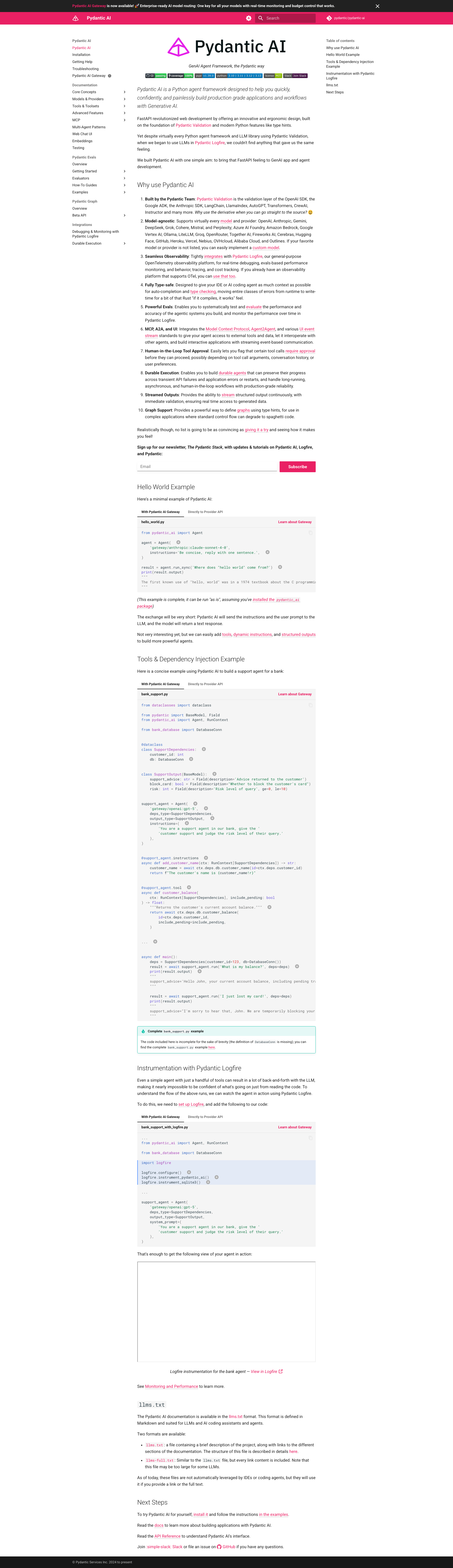 图:PydanticAI 官方网站首页
本章概览
本章将介绍 PydanticAI 的背景、核心价值和设计哲学,帮助你理解:
- PydanticAI 解决什么问题
- 为什么 Pydantic 团队要开发这个框架
- 与现有 Agent 框架(特别是 LangGraph)的定位差异
- 项目的核心特性和优势
1. 什么是 PydanticAI?
1.1 一句话定义
PydanticAI 是一个 Python Agent 框架,专为快速、自信且轻松地构建生产级生成式 AI 应用而设计。
通俗比喻:
如果说 Pydantic 是 Python 数据验证的"瑞士军刀",那么 PydanticAI 就是为 AI Agent 开发打造的同款工具——它继承了 Pydantic 的类型安全、验证严谨的基因,但专门针对 LLM 交互场景进行了优化。
1.2 核心设计理念
PydanticAI 的设计深受 FastAPI 启发,追求相同的开发者体验:
┌─────────────────────────────────────────────────────────────────┐
│                    FastAPI 设计哲学                               │
│  ┌─────────────┐  ┌─────────────┐  ┌─────────────────────────┐  │
│  │  类型提示    │  │  自动验证    │  │  开发者体验优先         │  │
│  │  Type Hints │  │  Validation │  │  Developer Experience  │  │
│  └─────────────┘  └─────────────┘  └─────────────────────────┘  │
└─────────────────────────────────────────────────────────────────┘
                              ▼
                    继承并演进到 AI 领域
                              ▼
┌─────────────────────────────────────────────────────────────────┐
│                    PydanticAI 设计哲学                            │
│  ┌─────────────┐  ┌─────────────┐  ┌─────────────────────────┐  │
│  │  类型安全    │  │  输出验证    │  │  AI 原生开发体验        │  │
│  │  Type-Safe  │  │  Output Val │  │  AI-Native DX          │  │
│  └─────────────┘  └─────────────┘  └─────────────────────────┘  │
└─────────────────────────────────────────────────────────────────┘1.3 Hello World 示例
最简单的 PydanticAI 程序只需几行代码:
from pydantic_ai import Agent

# 创建 Agent,指定模型
agent = Agent(
    'anthropic:claude-sonnet-4-0',
    instructions='Be concise, reply with one sentence.'
)

# 同步运行
result = agent.run_sync('Where does "hello world" come from?')
print(result.output)
# 输出: The phrase "Hello, World!" originated from Brian Kernighan's
# 1972 book "A Tutorial Introduction to the Language B."2. 项目背景
2.1 Pydantic 团队
PydanticAI 由 Pydantic 核心团队开发。Pydantic 是 Python 生态中最广泛使用的数据验证库:
| 使用场景 | 知名项目 |
|---|---|
| Web 框架 | FastAPI、Django Ninja |
| AI 框架 | LangChain、LlamaIndex、Anthropic SDK |
| API 服务 | OpenAI SDK、Google Generative AI |
| 数据处理 | Pandas、Great Expectations |
关键数据:
- 每月下载量:5 亿+
- GitHub Stars:22,000+
- 被 OpenAI、Anthropic、Google 等 AI 公司的 SDK 采用
2.2 为什么开发 PydanticAI?
在开发 Pydantic Logfire(他们的可观测性平台)时,团队开始使用 LLM。他们发现:
"当我们在 Pydantic Logfire 中开始使用 LLM 时,我们找不到任何能给我们带来相同感觉的工具——那种 FastAPI 带给 Web 开发的感觉。"
现有框架的痛点:
| 痛点 | 描述 |
|---|---|
| 类型安全缺失 | 难以在 IDE 中获得自动补全和类型检查 |
| 过度复杂 | 简单任务需要大量样板代码 |
| 模型锁定 | 难以在不同 LLM 提供商之间切换 |
| 测试困难 | 缺乏系统化的测试和评估框架 |
| 可观测性差 | 难以追踪和调试 Agent 行为 |
PydanticAI 的解决思路:
┌──────────────────────────────────────────────────────────────────┐
│                     PydanticAI 核心价值                            │
├──────────────────────────────────────────────────────────────────┤
│                                                                   │
│  1. 类型安全 ─────────────► IDE 智能提示 + 静态类型检查            │
│                                                                   │
│  2. 模型无关 ─────────────► 支持 20+ 提供商,轻松切换              │
│                                                                   │
│  3. 输出验证 ─────────────► Pydantic 模型保证结构化输出            │
│                                                                   │
│  4. 依赖注入 ─────────────► 类似 FastAPI 的优雅依赖管理            │
│                                                                   │
│  5. 原生可观测 ────────────► Logfire 深度集成                      │
│                                                                   │
│  6. 测试友好 ─────────────► 内置测试模型和评估框架                 │
│                                                                   │
└──────────────────────────────────────────────────────────────────┘3. 核心特性
3.1 模型无关(Model-Agnostic)
PydanticAI 原生支持 20+ 模型提供商:
┌─────────────────────────────────────────────────────────────────┐
│                      PydanticAI Agent                            │
└────────────────────────────┬────────────────────────────────────┘
                             │
       ┌─────────────────────┼─────────────────────┐
       ▼                     ▼                     ▼
┌─────────────┐      ┌─────────────┐       ┌─────────────┐
│   OpenAI    │      │  Anthropic  │       │   Gemini    │
│  GPT-4/5    │      │   Claude    │       │   1.5/2.0   │
└─────────────┘      └─────────────┘       └─────────────┘
       ▲                     ▲                     ▲
       │                     │                     │
┌─────────────┐      ┌─────────────┐       ┌─────────────┐
│    Groq     │      │   Mistral   │       │   Cohere    │
└─────────────┘      └─────────────┘       └─────────────┘
       ▲                     ▲                     ▲
       │                     │                     │
┌─────────────┐      ┌─────────────┐       ┌─────────────┐
│   Bedrock   │      │  Ollama     │       │ OpenRouter  │
│   (AWS)     │      │  (本地)      │       │             │
└─────────────┘ └─────────────┘ └─────────────┘使用方式:
# 使用 OpenAI
agent = Agent('openai:gpt-4o')

# 使用 Anthropic
agent = Agent('anthropic:claude-sonnet-4-0')

# 使用 Google Gemini
agent = Agent('google-gla:gemini-1.5-pro')

# 使用本地 Ollama
agent = Agent('ollama:llama3.2')

# 使用 AWS Bedrock
agent = Agent('bedrock:us.anthropic.claude-3-5-sonnet-20241022-v2:0')3.2 类型安全(Type-Safe)
PydanticAI 提供完整的类型提示支持,IDE 可以提供:
- 自动补全:输入时实时提示可用方法
- 类型检查:静态分析捕获运行前错误
- 文档提示:悬停显示参数说明
from pydantic import BaseModel
from pydantic_ai import Agent

# 定义结构化输出类型
class CityInfo(BaseModel):
    name: str
    country: str
    population: int
    famous_for: list[str]

# Agent 泛型参数:Agent[DependencyType, OutputType]
agent = Agent(
    'openai:gpt-4o',
    output_type=CityInfo,  # 强制输出必须符合此类型
)

result = agent.run_sync('Tell me about Paris')
# result.output 的类型是 CityInfo,IDE 完全识别
print(result.output.name)        # IDE 知道这是 str
print(result.output.population) # IDE 知道这是 int3.3 结构化输出验证
PydanticAI 确保 LLM 输出符合预期的数据结构:
┌─────────────────────────────────────────────────────────────────┐
│                      输出验证流程                                 │
│                                                                  │
│  LLM 响应 ──► JSON 解析 ──► Pydantic 验证 ──► 类型安全的输出      │
│                                │                                 │
│                                ▼                                 │
│                          验证失败?                               │
│                                │                                 │
│                    ┌───────────┴───────────┐                    │
│                    ▼                       ▼                    │
│               自动重试               返回详细错误                │
│          (ModelRetry 机制)        (供调试使用)                   │
│                                                                  │
└─────────────────────────────────────────────────────────────────┘3.4 依赖注入
类似 FastAPI 的依赖注入系统,让代码更加模块化:
from dataclasses import dataclass
from pydantic_ai import Agent, RunContext

# 定义依赖
@dataclass
class SupportDependencies:
    customer_id: int
    db_connection: DatabaseConn

# 创建 Agent 时指定依赖类型
agent = Agent(
    'openai:gpt-4o',
    deps_type=SupportDependencies,
)

# 工具中通过 ctx.deps 访问依赖
@agent.tool
async def get_customer_info(ctx: RunContext[SupportDependencies]) -> str:
    """获取客户信息"""
    customer = await ctx.deps.db_connection.get_customer(
        ctx.deps.customer_id
    )
return f"Customer: {customer.name}, Balance: {customer.balance}"3.5 可观测性集成
与 Pydantic Logfire 深度集成,提供:
import logfire
from pydantic_ai import Agent

# 配置 Logfire
logfire.configure()
logfire.instrument_pydantic_ai()

# 正常使用 Agent
agent = Agent('openai:gpt-4o')
result = agent.run_sync('Hello!')

# 自动追踪:
# - Agent 执行轨迹
# - 每次模型请求详情
# - 工具调用记录
# - Token 使用统计
# - 错误和重试3.6 评估框架
内置系统化的测试和评估能力:
import pytest
from pydantic_ai import Agent
from pydantic_ai.models.test import TestModel

# 使用 TestModel 避免真实 API 调用
@pytest.fixture
def test_agent():
    return Agent(
        TestModel(),  # 测试模型,自动生成符合 schema 的响应
        output_type=MyOutput,
    )

def test_agent_response(test_agent):
    result = test_agent.run_sync('test prompt')
assert isinstance(result.output, MyOutput)4. 十大核心能力
PydanticAI 官方强调的十大核心能力:
| # | 能力 | 描述 |
|---|---|---|
| 1 | Pydantic 基因 | 继承 Pydantic 的类型安全和验证能力 |
| 2 | 模型无关 | 支持 20+ 提供商,统一 API 接口 |
| 3 | 可观测性 | Logfire 原生集成,OpenTelemetry 标准 |
| 4 | 类型安全 | 完整的 IDE 支持和静态类型检查 |
| 5 | 评估框架 | 内置测试和性能监控工具 |
| 6 | MCP 支持 | Model Context Protocol 集成 |
| 7 | Human-in-the-Loop | 工具审批和条件逻辑支持 |
| 8 | 持久执行 | 处理 API 故障和长时间运行的工作流 |
| 9 | 流式输出 | 持续生成结构化数据并验证 |
| 10 | 图支持 | 基于类型提示的复杂工作流定义 |
5. 定位与生态
5.1 与 LangChain/LangGraph 的定位差异
作为 LangChain 首席科学家,我认为 PydanticAI 与 LangGraph 有着不同的定位:
┌─────────────────────────────────────────────────────────────────┐
│                       框架定位对比                                │
├─────────────────────────────────────────────────────────────────┤
│                                                                  │
│   PydanticAI                          LangGraph                  │
│   ─────────                           ─────────                  │
│   "FastAPI for AI"                    "State Machine for AI"     │
│                                                                  │
│   ┌─────────────────┐                ┌─────────────────┐        │
│   │ 简洁优雅        │                │ 精确控制         │        │
│   │ 类型安全优先    │                │ 状态管理优先     │        │
│   │ 快速开发        │                │ 复杂编排         │        │
│   │ 验证驱动        │                │ 图驱动           │        │
│   └─────────────────┘                └─────────────────┘        │
│                                                                  │
│   适用场景:                          适用场景:                  │
│   • 快速原型                          • 复杂多 Agent 系统        │
│   • 类型敏感应用                      • 需要精确状态控制         │
│   • 结构化输出                        • 高度自定义流程           │
│   • API 服务集成                      • 企业级编排               │
│                                                                  │
└─────────────────────────────────────────────────────────────────┘5.2 有趣的事实
一个有趣的事实是:LangChain 本身就使用 Pydantic 作为核心依赖。
LangChain 技术栈
       │
       ├── Pydantic(数据验证)  ◄─── PydanticAI 的基础
       ├── LangGraph(编排)
└── LangSmith(可观测)这意味着 PydanticAI 和 LangGraph 并不是竞争关系,而是可以互补的工具。
6. 安装与快速开始
6.1 安装
# 标准安装
pip install pydantic-ai

# 或使用 uv(更快)
uv add pydantic-ai

# 精简安装(仅特定模型)
pip install "pydantic-ai-slim[openai]"

# 带可观测性
pip install "pydantic-ai-slim[openai,logfire]"要求:Python 3.10+
6.2 配置 API 密钥
# OpenAI
export OPENAI_API_KEY="sk-..."

# Anthropic
export ANTHROPIC_API_KEY="sk-ant-..."

# Google
export GOOGLE_API_KEY="..."6.3 第一个 Agent
from pydantic_ai import Agent

# 创建最简单的 Agent
agent = Agent('openai:gpt-4o')

# 运行
result = agent.run_sync('What is the capital of France?')
print(result.output) # Paris7. 阅读指南
为了更好地理解 PydanticAI,建议按以下顺序阅读本章:
| 顺序 | 章节 | 内容 |
|---|---|---|
| 1 | architecture.md | 架构设计与核心组件 |
| 2 | core-concepts.md | Agent、Tools、Dependencies 详解 |
| 3 | comparison.md | 与 LangGraph 深度对比 |
| 4 | integration.md | 两个框架的协同集成 |
| 5 | practice.md | 实战案例与最佳实践 |
| 6 | conclusion.md | 总结、选型建议与展望 |
8. 小结
PydanticAI 是一个令人兴奋的新框架,它将 Pydantic 的类型安全和验证能力带入了 AI Agent 开发领域。虽然它还很年轻,但其设计理念和开发体验都非常出色。
核心优势:
- 继承 Pydantic 的成熟验证体系
- FastAPI 风格的开发者体验
- 强大的类型安全支持
- 优雅的依赖注入
- 原生可观测性集成
需要关注:
- 相比 LangGraph,复杂编排能力还在发展中
- 社区和生态还在建设
- 文档和示例相对较少
在接下来的章节中,我们将深入探讨 PydanticAI 的架构设计、核心概念,并与 LangGraph 进行详细对比。
下一章:架构设计